
Precise Drilling
Our high-temperature MEMS accelerometers provide exceptional accuracy and reliability in extreme environments for directional drilling.

Complete the form, and our sales team will contact you within 1 business day.
For product support, please visit our support hub.

Safran produces high-performance, tactical grade accelerometer sensors. These sensors can track the position and inclination of vehicles, drill bits, drones, and any other moving object that you need to measure in real time. The accelerometer sensors can measure the acceleration of any object you mount them to, with an accuracy of 0.1 degrees of error or better.

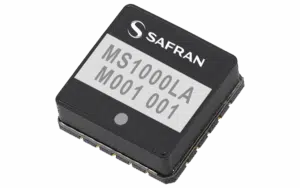
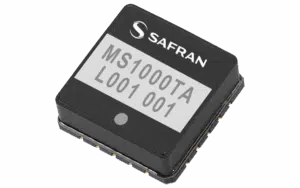
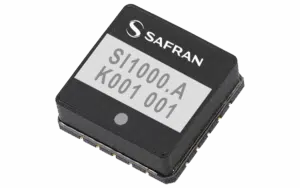
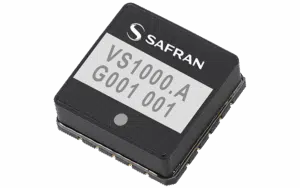

It is common to use 3 accelerometers within a system in order to measure the movement in all directions. Each accelerometer will measure the acceleration in its respective direction and output a voltage to indicate the amount of acceleration.
A microscopic spring shifts when the device accelerates and that motion changes an electrical property such as capacitance. Electronics (e.g. the ASIC chip inside the ceramic package) measure those tiny changes and translate them into a voltage or digital value that represents acceleration along one or more axes.
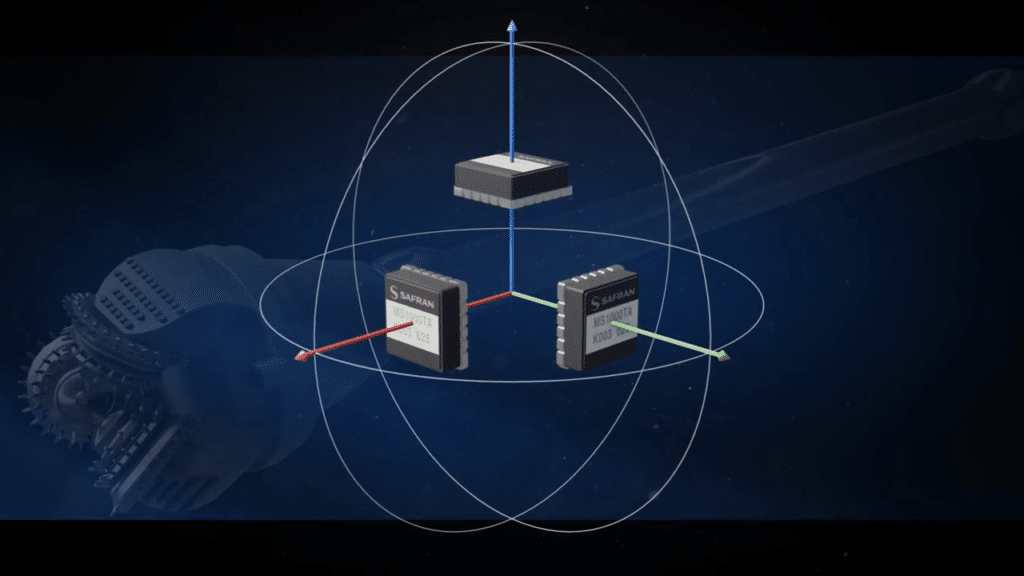
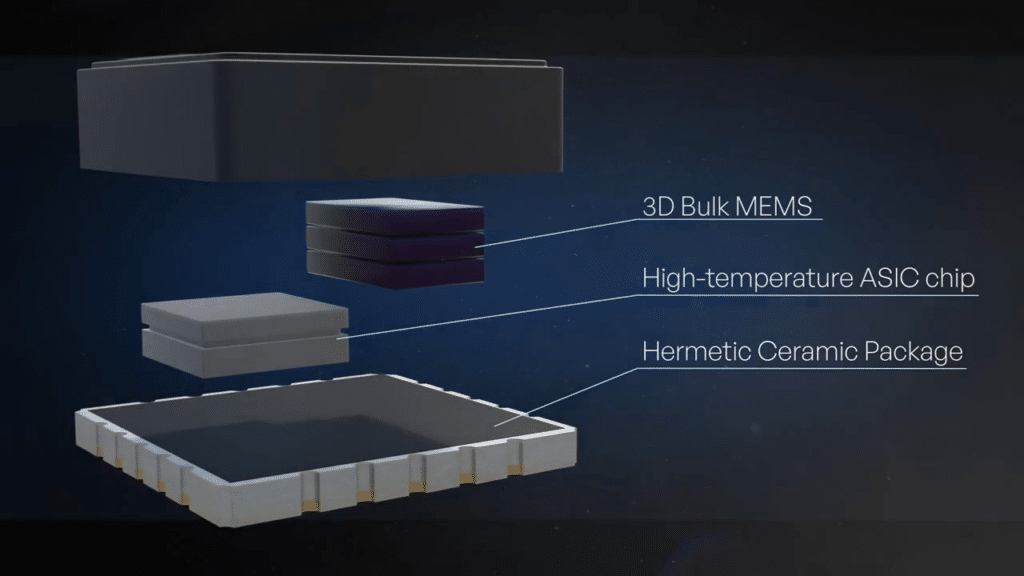
The components of a mems accelerometer include 3 silicon layers and 2 stationary electrodes sandwiched around a seismic mass. Whenever acceleration occurs, the mass moves relative to the stationary electrodes, generating a change in capacitance. That change is then converted into an output voltage which is proportional to the applied acceleration.
Paired with gyroscopes, accelerometers will help provide the full picture of motion in any application.

Cost-Efficiency
Low cost, low power requirements, and compact design.

Versatility
Built for demanding environments like Oil & Gas, Defense, and Space industries.

Extreme Durability
Our seismic sensor handles up to 6,000g of shock resistance, which is critical for rugged applications.

Unmatched Stability
Over 20X better bias stability, even in high temperatures (150°C – 175°C).

Gun-Hard Performance
Our gun hard accelerometer handles 20,000g shocks, ideal for intense applications.

Precision
Offers superior stability and precision compared to alternative solutions.

Quality Assurance
100% of parts are rigorously tested over the full temperature and dynamic range.

Legacy of Trust
Over 30 years of experience playing a pivotal role in powering modern technology.
Our high-temperature MEMS accelerometers provide exceptional accuracy and reliability in extreme environments for directional drilling.

The MS1000 accelerometer enables precise north finding for tactical navigation and target orientation, ensuring accuracy in key applications.

Our MS1000 MEMS accelerometer ensures UAV and ROV stability with rugged low-power performance. It delivers precise navigation and shock…

Safran leads in developing advanced MEMS accelerometers for railway safety, improving vibration monitoring, speed control, and track analysis.

The SI1000 accelerometer provides precise test and measurement data across industries like defense and automotive, ensuring reliable results.

Explore how bogie monitoring and vibration analysis improve high-speed train performance, comfort, passenger safety, and maintenance.
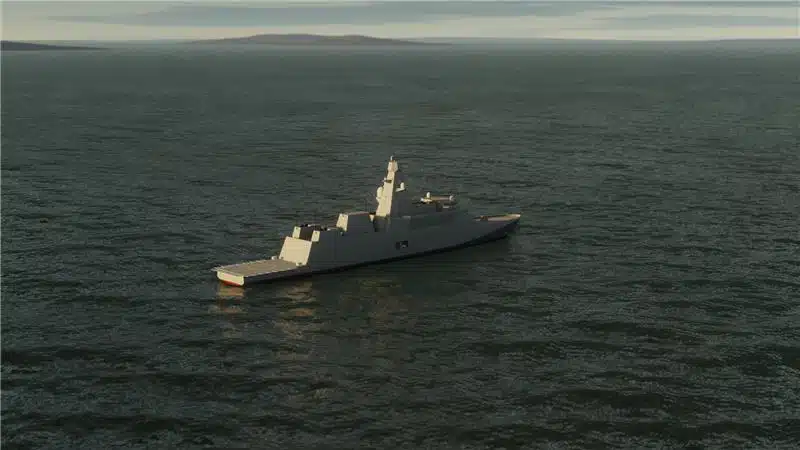
Our Navigation System Accelerometers delivers precise positioning with excellent bias and scale factor stability (+/-10 g) to maintain accuracy…

Ensure uptime for GNSS or GPS-aided system guidance during a short time outage using Dynamic GPS Tracking Systems.

Discover the VS1000 MEMS accelerometer, ideal for wind turbine vibration analysis, ensuring accuracy and reliability in harsh conditions.

Learn how our MEMS accelerometers improve Structural Health Monitoring by detecting early faults, enhancing safety, and reducing costs.

Safran MEMS accelerometers enhance positioning by providing accurate motion data, ensuring collision prevention, and reliable navigation.

Precision tilt measurement is essential for train control, and Safran’s MS1000 delivers reliable tilt readings for a smoother, safer ride.

Safran MEMS accelerometers enhance high-speed train suspension by providing precise data, improving ride comfort, longevity, and efficiency.
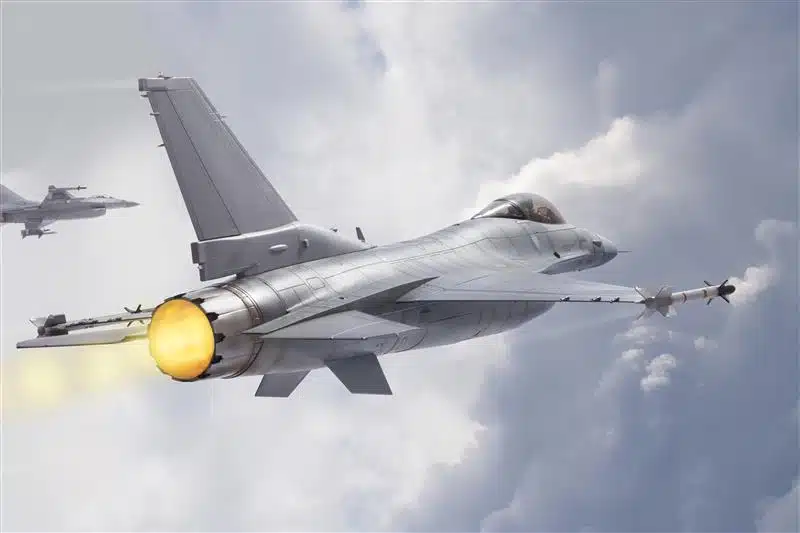
Safran Colibrys MS1000 MEMS accelerometer is designed for inertial application such as AHRS.
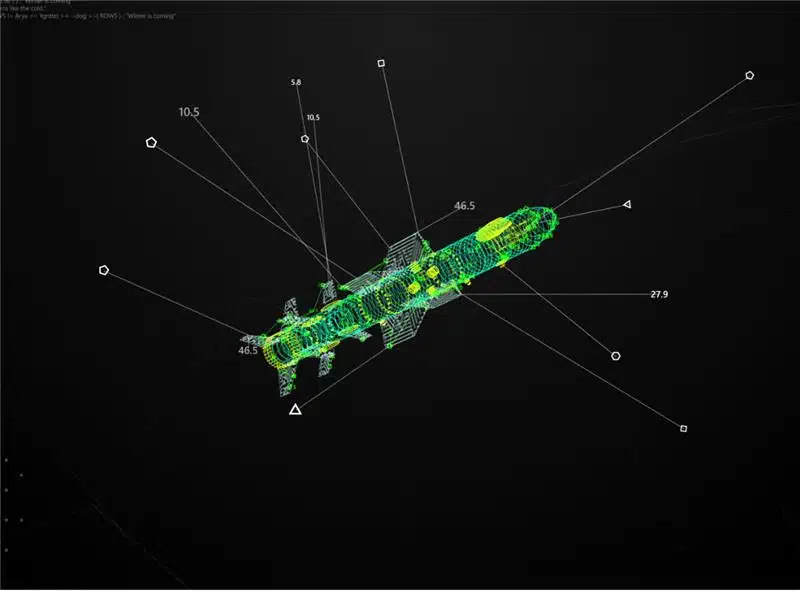
Accelerometers have to perform after the initial shock and impact, allowing the weapon to self-destruct or render itself inert to prevent…
Safran accelerometer sensors are built to last. Every accelerometer undergoes tough qualification tests. They endure over 500 hours at 150°C and 60 thermal cycles from -40°C to +150°C —proving their strength in extreme heat and rapid temperature changes, whether they are being used deep underground for directional drilling, or at freezing high altitudes on an aircraft.
They also survive 500 shocks at 1000 g and 12,000 shocks at 100 g, demonstrating resilience against the intense vibration and movement of any application. Finally, each sensor passes 20 gRMS random vibration tests, ensuring stable, accurate performance.


In the Defense industry, Safran’s solutions provide crucial data, frequency response, measurement range, and the environmental robustness required for mission success. You can depend on the reliability of a Safran acceleration sensor because we have a proven track record of delivering robust products in real-world environments. In the Aerospace industry, our MEMS inertial sensor technology helps keep aircrafts safe and efficient. This makes flights smoother and more reliable.
Beyond critical applications, our MEMS inclinometer and vibration sensor are indispensable in the industrial and commercial sectors. Our high performance accelerometer products offer you precision when it comes to measuring how fast an object’s speed or direction changes. Micro electro mechanical systems (MEMS) help with the precise orientation of heavy machinery in factories and improve navigation systems in smartphones. Customers worldwide trust Safran’s MEMS capacitive accelerometers.