Skydel GNSS Simulation Software
Advanced Simulation with Modern, Software-based Flexibility
Safran’s advanced Skydel GNSS software is more flexible, scalable, customizable, upgradeable, and cost-effective compared to traditional FPGA-based simulators.
The way the world thinks about GNSS simulation today is not the same as even a few years ago, thanks to leaps in technology with software-defined radios and COTS components.
Safran’s Skydel Simulation Engine offers the best of both worlds: high-end performance you expect from a top-grade GNSS simulator, coupled with the economy of scale and flexibility of using your own hardware with its GNSS software architecture.
Packed with a rich feature set including a 1000 Hz simulation iteration rate, remote control from user-defined scripts, and a software-defined architecture, Skydel offers unmatched flexibility and scalability.
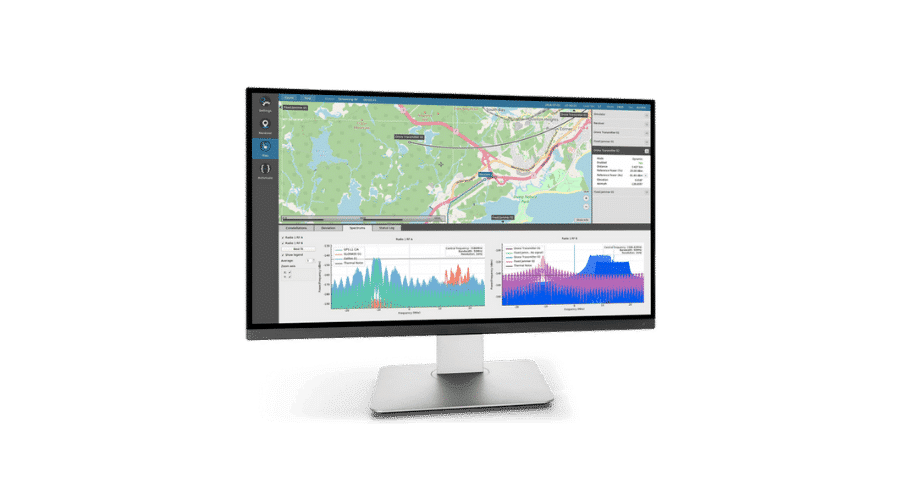
And all of this, packaged in a modern, streamlined user interface – with an almost unlimited number of signals. Skydel offers real-time GNSS simulation of the highest quality.
Want to become a Skydel and simulation expert? Take our globally-recognized GNSS Simulation courses.
ADVANTAGES
Frequent Updates
Skydel follows an agile development cycle that ensures rapid, continuous innovation and improvement. With four major updates released each year, Skydel evolves quickly to meet the demands of modern GNSS simulation.
Each release is designed to boost performance, support the latest hardware platforms, and—best of all—introduce new features and signals that expand testing capabilities. This fast-paced development approach keeps users at the cutting edge of GNSS technology.
All Constellations, All Signals
Skydel GNSS simulator ensures realistic testing that transfers to the real world. A solution ready to scale with your needs, simulate all visible satellites for all constellations and all frequencies with a 1000 Hz iteration rate and ultra–high dynamics. Create scenarios and update them on-the-fly.
Integrated Jamming & Spoofing
With no additional hardware required, advanced jamming and spoofing on Orolia’s software-defined platform allows users to simulate multiple threats simultaneously. Skydel software automatically determines signal dynamics between each, saving you time.
Open Source Plugins & Community
Our Skydel forum connects you directly with users like you across many industries and leading research universities. Our plugin Github is host to everything you need to tailor Skydel to your simulation needs.
Powerful Automation
Easy to use and comprising hundreds of commands, Skydel’s API brings an unparalleled level of control over simulation, enabling you to build complex, elaborate and repeatable scenarios with open source client libraries for Python, C# and C++.
Software-Based Design
With a software-based design, Skydel scales to match customer budgets and can quickly adapt to new signal types, constellations, and other nav sensors. Moreover, because performance leverages the latest COTS hardware technology, Skydel has lower lifecycle costs and faster time to market.
USE CASES
-
Multi-Antenna GNSS Simulation for Unmanned Aerial Vehicles (UAVs)
Safran’s Skydel GPS/GNSS Simulators enable cost-effective, scalable multi-antenna testing for UAV applications.
-
Multi-Antenna GNSS Simulation for Automotive Applications
Safran’s Skydel GPS/GNSS Simulators enable cost-effective, scalable multi-antenna testing for automotive applications.
-
GNSS Simulation for Space Launch Applications
Featuring Skydel GNSS Simulation, featuring precise orbital trajectories, realistic atmospheric models, and robust interference scenarios
CASE STUDIES
-
Safran’s GSG-8 Advanced Simulator Drives R&D Testing for Stellantis (formerly FCA – Fiat Chrysler Automobiles)
Discover how the flexible and scalable GSG-8 platform delivered a cost-effective and high-end precision GNSS testing to the automotive industry.
-
Safran’s GSG-8 GPS/GNSS Simulator Trains Pilots to React to Real-World Situations
Military aviation programs provide standard pilot training to ensure that they can handle fighters, drone swarms and other advanced threats. But as they run complex flight training scenarios and face off against live and virtual adversaries, what may be overlooked is the value of using GPS/GNSS simulation to duplicate actual cockpit instruments, rather than relying…
REQUEST A QUOTE
FEATURES
- Supports all major global constellations & frequencies (GPS, GLONASS, Galileo, BeiDou, QZSS, NavIC)
- Multi-constellation, multi-frequency
- 1,000 Hz iteration rate
- Multi-vehicle & multi-antenna simulation
- Satellite orbit modification and custom support (LEO constellations)
- Advanced jamming and spoofing simulation
- Multipath Models
- Import multiple file formats CSV, KML, NMEA etc
- 6 DoF and orbital trajectories
- User-defined waveforms
- Hundreds of satellites can be simulated in real time using COTS hardware
- IQ file generation and playback
- Comprehensive API: (Python, C++, C#)
- Integrate interface with no additional hardware
- Record and export user interactions as Python script
- Modify parameters and variables in real-time
- Signal customization
- Advanced scenario creation
- Intuitive UI and automation
SPECS
- Frequency Bands
- All GNSS bands
- Multiple RF outputs depending on SDR configuration
- Baseband complex (zero IF) through IQ samples logging
- Operating Systems: Linux & Windows
- GNSS Constellations and Signals:
- GPS: L1-C/A, L1C, L1-P(Y), L2-P(Y), L2C, L5;
- NavIC L1, L5, S-Band;
- GLONASS: G1, G2;
- Galileo: E1, E5a, E5b, E6, E6PRS, E6 HAS, E5AltBOC, PRS (restricted signals), PRS-Noise, HAS-Noise; OSNMA
- BeiDou: B1, B2, B1C, B2A, B2B, B3I;
- QZSS: L1-C/A, L1 C/B, L2C, L5, L5S
- SBAS (L1/L5): WAAS, EGNOS, MSAS, GAGAN, SDCM
- Xona: PULSAR X1, X5
- Custom Signals
- Custom Constellation
- Signal Accuracy
- Pseudorange < 1mm
- Pseudorange rate < 1mm/s
- Inter-channel bias 0