
GPS Simulators
Safran’s GNSS satellite simulators deliver powerful, scenario-based testing with unmatched ease of use, precision, and affordability.
Our advanced simulators generate accurate RF signals from all global and regional systems: GPS, GLONASS, Galileo, BeiDou, QZSS, NavIC, and LEO constellations. Whether you’re testing in the U.S., Europe, Asia, or space, Safran provides the most reliable, high-performance GNSS simulation for mission-critical results.
GPS Simulators Overview
What Is A GPS Simulator?
As GPS / GNSS receivers are built into more mission-critical devices for difficult application environments, and designed with the emerging capabilities of a multitude of GNSS (Global Navigation Satellite System) constellations and augmentation systems, developers and manufacturers need better ways to guarantee performance. That’s where a GNSS GPS simulator comes in.
While the test engineer has a variety of choices for testing GNSS-based position, navigation and timing functions of their integrated GPS receivers, simulation offers the most flexibility, compared to testing with over-the-air signals (“live sky”), or record and replay solutions. Having complete control over GPS signal generation is the only way to have confidence in your hardware and software’s ability to perform – under any condition and in any environment.
How Do GNSS Simulators Work?
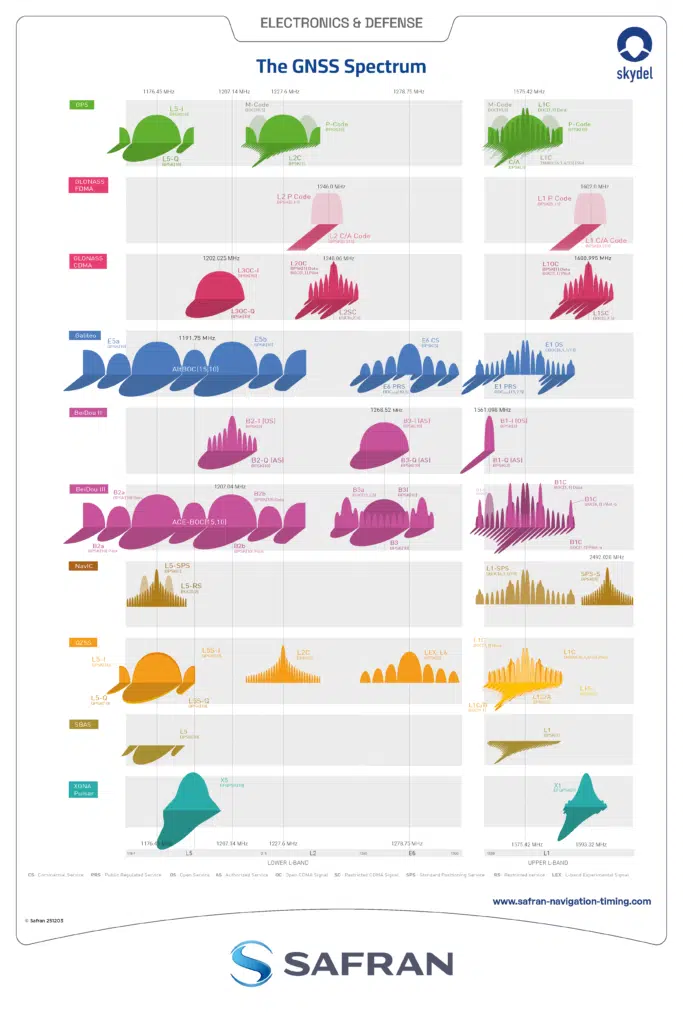
To understand how a GNSS simulator works, it is helpful to understand some of the details of GPS signal transmissions. For example, the GPS constellation consists of at least 24 satellites, orbiting every 12 hours, broadcasting navigation data on different frequencies. GPS is just one of several global navigation satellite systems (GNSS) in operation, or soon to be in operation. (See GNSS Terminology Explained for more detail.) Most navigation applications today use the GPS L1 frequency at the radio frequency 1575.42 MHz. Onto this carrier frequency, satellites transmit identification information and a navigation message that contains synchronized time, the satellite’s orbital data (ephemeris) and data on the expected positions of all the satellites in the constellation (almanac). It is from this data that receivers can accurately calculate its distance from several satellite signals at the same time to achieve its navigation solution through trilateration.

Cost-Effective GNSS Simulation
Cost-effective GNSS simulation is an extremely helpful and flexible alternative because it allows engineers to recreate GNSS signals and include all the variables for a simulation right at their desk, test bench, or lab. They can then evaluate how their receiver device reacts to real RF signals, how accurate it is, and how it responds to different scenarios, environments, and constellations.
Building your own GNSS simulator system can be enjoyable, but it requires technical expertise. Built around the powerful Skydel GNSS simulation engine, we provide general guidance and recommendations in terms of hardware and other components for you to build your own GNSS simulator.

One of Skydel’s greatest assets is its software-defined architecture that allows users to leverage their own off-the-shelf hardware. This GNSS simulation approach gives Skydel maximum scalability and flexibility, and it provides users with the ability to develop and innovate while not limited by hardware design.
With a Skydel software license in hand, users can simply purchase the hardware they need, and start simulating.
Signal Generation & Use Cases
Essential GNSS Simulation
Our GPS/GNSS satellite simulators are easy to use, scenario-based instruments that combine a powerful, feature-rich platform with industry-leading value and affordability for any requirement for GPS testing.
A GNSS Signal Generator is a device that is able to create simulated satellite signals and generate real RF signals by first producing I/Q data and calculating the orbits of satellites at a user-defined time, location and trajectory. Our simulators generate the same RF signals that are broadcast by navigation satellites to test any device or system with a GPS receiver.
GPS simulators can be used to:
- Validate and improve GPS receiver functionality
- Emulate accurate, high-quality GPS signals and data
- Test positioning, navigation and timing (PNT) devices in simulated complex environments
Generate Real RF-Signals For Satellite Signal Testing
In order to properly test a GNSS receiver, or any device or system that relies on global navigation satellite signals, engineers need to simulate the same RF signals that are broadcasted by real satellites.
Test engineers may start with real-world, or “live-sky” tests to see how their new product or device will perform, but it is hard to replicate a test because the satellites are constantly moving. The atmospheric conditions also have variability, and it would be expensive and time-consuming to test a GNSS receiver in all the parts of the globe, and every time of day where it might be used.

GNSS Testing Methods
Conducted vs. Over-the-Air (OTA) Testing
Global Navigation Satellite System (GNSS) technology is critical to industries such as defense, aerospace, and automotive, where precision, reliability, and security are essential. However, real-world GNSS signals are vulnerable to interference, jamming, and spoofing, posing significant risks to mission-critical applications. To ensure robust performance, GNSS testing must be conducted in controlled environments that replicate real-world threats while eliminating unpredictable variables.
CRPA (Controlled Reception Pattern Antenna) and Over-the-Air (OTA) testing provide essential validation by enhancing resistance to interference and ensuring system resilience.
- Conducted testing involves directly connecting a GNSS receiver or antenna to a signal simulator via cables, allowing precise control over signal conditions while eliminating external interference. This method is ideal for testing receiver performance in a controlled, repeatable manner.
- OTA testing, on the other hand, evaluates GNSS performance in a wireless environment, typically within an anechoic chamber. It accounts for real-world factors such as antenna characteristics, multipath effects, and spatial signal variations, making it essential for validating system performance in operational conditions.
| Type of Testing | Conducted | Conducted | Over-the-Air |
|---|---|---|---|
| General GNSS simulation and testing | CRPA testing, jamming+spoofing | All-encompassing GNSS Testing | |
| Device under test (DUT) | Standard GNSS receivers | CRPA electronic device | CRPA antenna + electronic device GNSS receivers Full systems |
| Features Supported | • Multi-frequency/ constellation • Multi-antenna testing • Jamming/spoofing • Real-time HIL • IMU support | • Multi-frequency/ constellation • Multi-antenna testing • Jamming/spoofing • Real-time HIL • IMU support | • Full RF isolation • Wide-band support • Jamming/spoofing, CRPA • Multi-environment simulation • IMU support |
| Simulator | Skydel GSG-7 GSG-8 Gen2 | GSG-Wavefront | GSG-Anechoic |
CRPA Testing for Defense Applications
In defense missions where resilience against jamming and spoofing isn’t optional but mission-critical, rigorous CRPA (Controlled Reception Pattern Antenna) testing ensures your multi-element antenna systems perform flawlessly in contested environments. CRPA test systems replicate real-world GPS/GNSS signals and hostile threats so engineers can validate anti-jam performance, identify vulnerabilities, and certify readiness long before deployment.
Why use an anechoic chamber?
An anechoic chamber provides an ideal environment for GNSS testing by eliminating external interference and unwanted signal reflections. This controlled setting ensures high precision, allowing for repeatable and consistent test conditions that are impossible to achieve in open-air environments. By simulating real-world scenarios without unpredictable variables, anechoic chambers enable accurate evaluation of GNSS receivers, antennas, and anti-jamming technologies. Additionally, they support Over-the-Air (OTA) testing, ensuring that systems perform reliably in operational conditions while maintaining compliance with industry standards.
How do CRPA antennas work?
Controlled Reception Pattern Antennas (CRPAs) use advanced beamforming techniques to dynamically filter and mitigate interference. By adjusting their reception pattern in real time, CRPAs enhance GNSS signal integrity, making them ideal for military, aerospace, and high-security applications.
Upgrade Your GNSS Performance with Advanced GNSS Simulation Products
GNSS simulators (also known as GNSS signal generators) are radio frequency generating instruments that are capable of transmitting the same exact data as GNSS satellites. However the value of a GNSS simulator is in the ability to change a wide variety of parameters right from the test bench:
Data from the satellite:
- Date/Time via the clock parameters
- Satellite ID (PRN code)
- Ephemeris and almanac
Conditions as seen by the receiver:
- Number of satellite signals
- Power level
- Atmospheric and antenna errors through models
- Multi-path conditions
Position of the receiver:
- Start position (latitude, longitude and elevation)
- Trajectory (motion path)

Simulate the World’s GNSS Signals
It is the combination of all these parameters that make up a “scenario” for a GPS simulator device. All Safran GSG models can be used in signal generator mode to generate a single-satellite data stream to verify receiver signal acquisition and validate assembly. Safran simulators can simultaneously generate signals from many satellites across multiple bands. They can be enabled to simulate GPS, or other global navigation satellite systems such as GLONASS, Galileo, BeiDou, QZSS, Pulsar, and IRNSS also simultaneously, to test multi-GNSS capability. They also have the ability to generate signals from satellite-based augmentation systems (SBAS); WAAS (North America), EGNOS (Europe), MSAS (Japan), and GAGAN (India). Since the various GNSS constellations currently, or plan to, transmit on other frequencies, Safran multi-frequency simulators are designed to generate these signals in addition to L1 (and Galileo’s E1 and BeiDou B1) such as GPS L2, L2C, L5; GLONASS L2; Galileo E5, E6; BeiDou B2, B3; IRNSS L5.
Test Your GNSS Receivers with Dynamic Trajectory Simulation
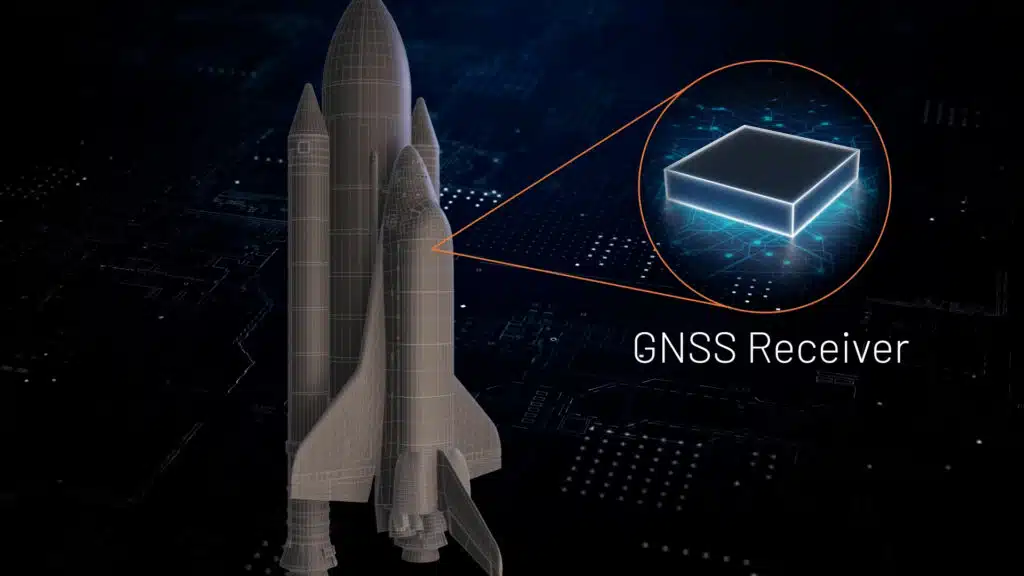
GNSS signal generators are programmed to simulate receiver motions to ensure the system is capable of performing under any trajectory. Trajectory is just one parameter included in a scenario. Pre-defined scenarios are loaded into the device ready for use right out of the box. Alternatively, you can edit and save your scenario parameters through the front panel, through uploadable files, or from scenario-builder software, and start. The simulator automatically generates the RF signals for testing GNSS receivers using conducted signals through RF connectors and cables, or radiated signals using an antenna. Testing can be controlled remotely or automated using a variety of instrument interfaces and a SCPI command protocol. Several new capabilities allow for seamless integration of GNSS simulation in an application-specific test platform where data can be exchanged to synchronize the signals to other simulated data in real-time.
Unlock Testing Potential While Saving Time and Money With GNSS Simulators
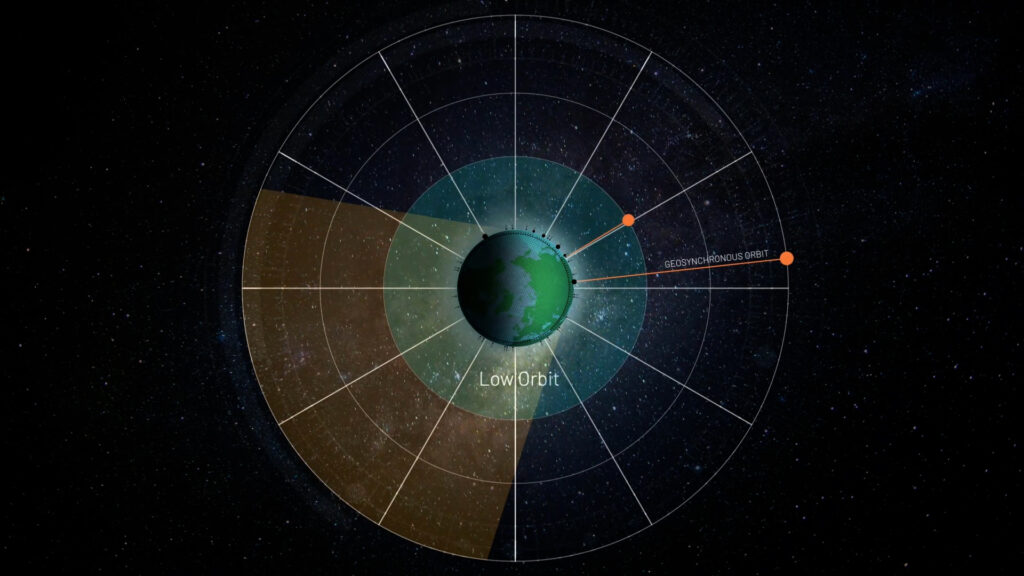
Without GNSS / GPS simulation, attempts to test receivers with over-the-air signals or record-and-replay solutions would be limited to the satellites available at a particular time and place, and under current conditions. Testing remote locations or high velocities would be costly, time-consuming or impractical. And with “live sky” signals, the test parameters and environment would never be repeatable.
Test more parameters, more often, with extreme flexibility for development and manufacturing; save time and money with GNSS simulators.
View Our GPS/GNSS Simulators

Skydel GNSS Simulation
The World’s Leading Software-based Simulation Platform
Skydel is the world’s leading software-based simulation platform, ready to work wherever you are. From home offices to research labs to automotive manufacturing to defense, Skydel is ready to meet your simulation and testing needs with turn-key hardware solutions or, an industry first, a BYOH (Bring-Your-Own-Hardware) option. Experience realistic testing scenarios for a fraction of the cost, and watch our demo for more information.
GSG-7
Advanced GPS / GNSS Simulator
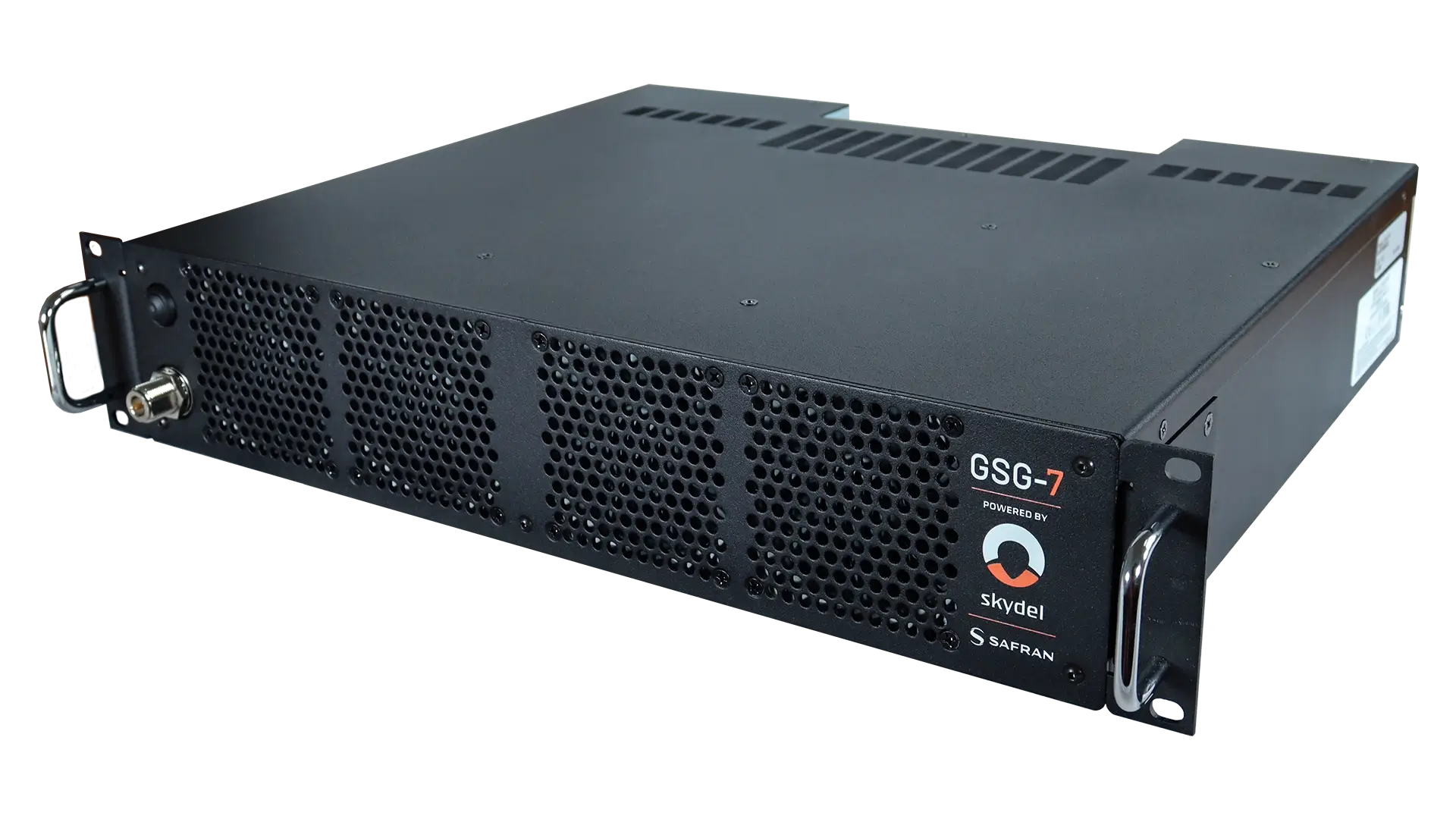
The newest positioning, navigation, and timing test solution offered through Safran’s family of Skydel-based simulators delivers the highest standard of Global Navigation Satellite System (GNSS) signal testing in an easy-to-use, turnkey, small form factor. This advanced GNSS simulator enables you to generate the same RF signals as real satellites, allowing you to test your GPS / GNSS receiver device in any scenario.

GSG-8 Gen2
The Next Evolution of GNSS Simulation
Safran’s GSG-8 Gen2 is an evolution of the popular GSG-8. An expert-level positioning, navigation, and timing test solution offered through Safran’s family of Skydel-based simulators. Designed for multi-antenna, multi-vehicle simulations, and scenarios with advanced interference.
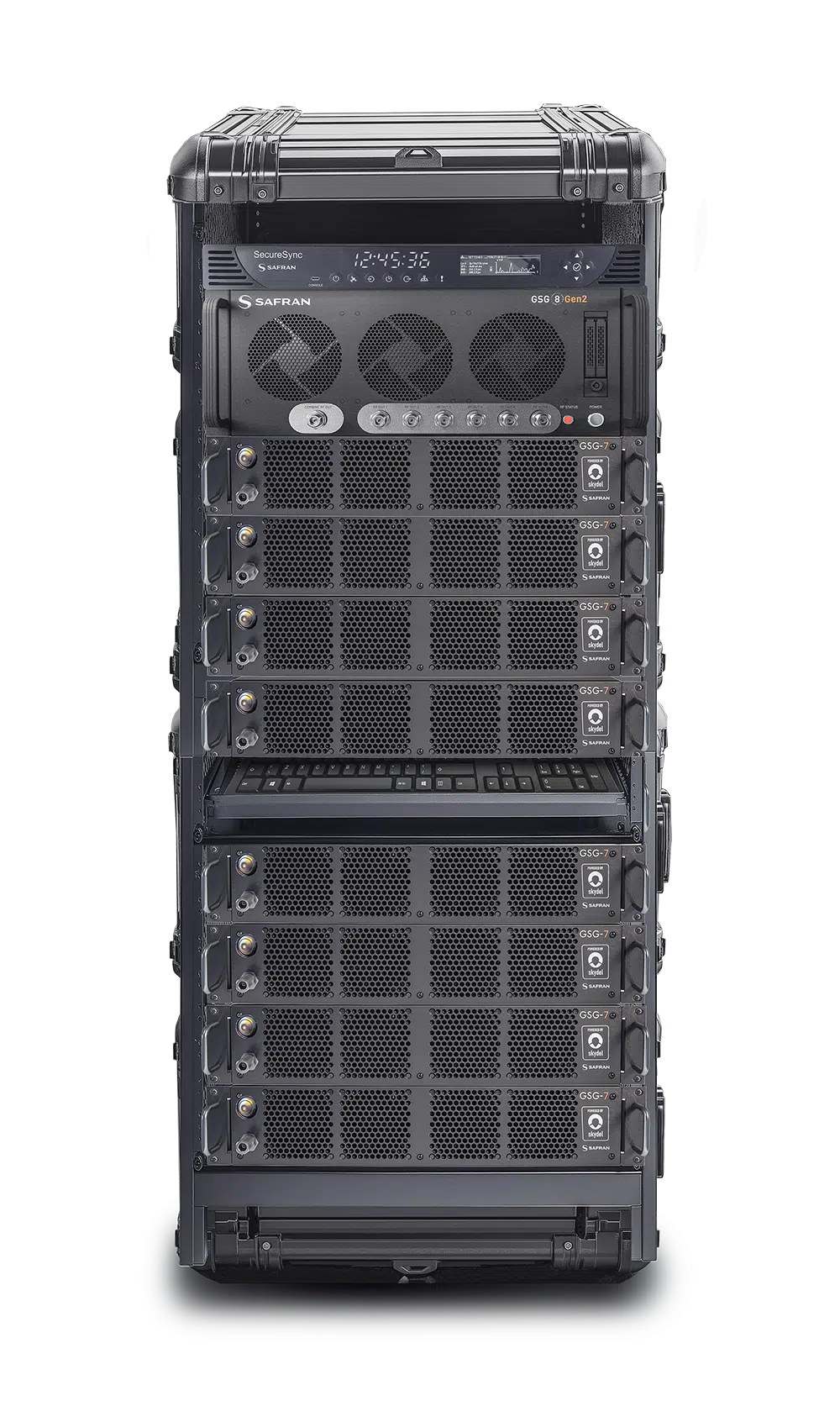
GSG-Anechoic
Anechoic Chamber GNSS Simulator System
Designed to test GNSS systems in an anechoic chamber, used to test CRPA / multi-element antennas, antenna electronics and entire PNT systems, Our GSG-Anechoic solution delivers full anechoic chamber capability with powerful automatic calibration and multi-output support for comprehensive antenna and system-level evaluation.
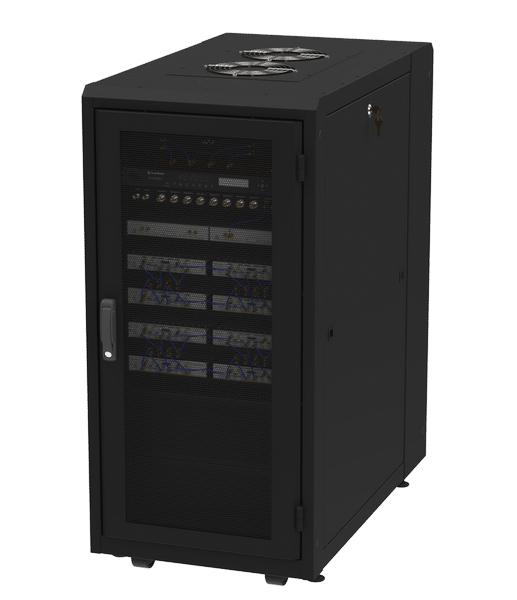
GSG-Wavefront
Software-Defined CRPA Test System
GSG-Wavefront brings scalable, phase-coherent simulation with dynamic threat modeling and real-time jamming/spoofing simulation, making it ideal for defense labs that need to test CRPA systems, multi-element antenna electronic elements, and high-dynamics scenarios.